AI agents are still far from becoming everyday shoppers, but this is a snapshot of one delivery service, not a verdict on all AI.
DoorDash's several hundred outside-agent orders accumulated over an unspecified period, while its 993 million regular orders cover one quarter, so calculating an exact adoption rate would be misleading (sec.gov; 247wallst.com).
The surprise is that DoorDash's own AI helper tells a different story: its orders average nearly 50% higher spending and roughly 60% more different items, suggesting that helping people choose may catch on before letting outside software buy independently (arstechnica.com).
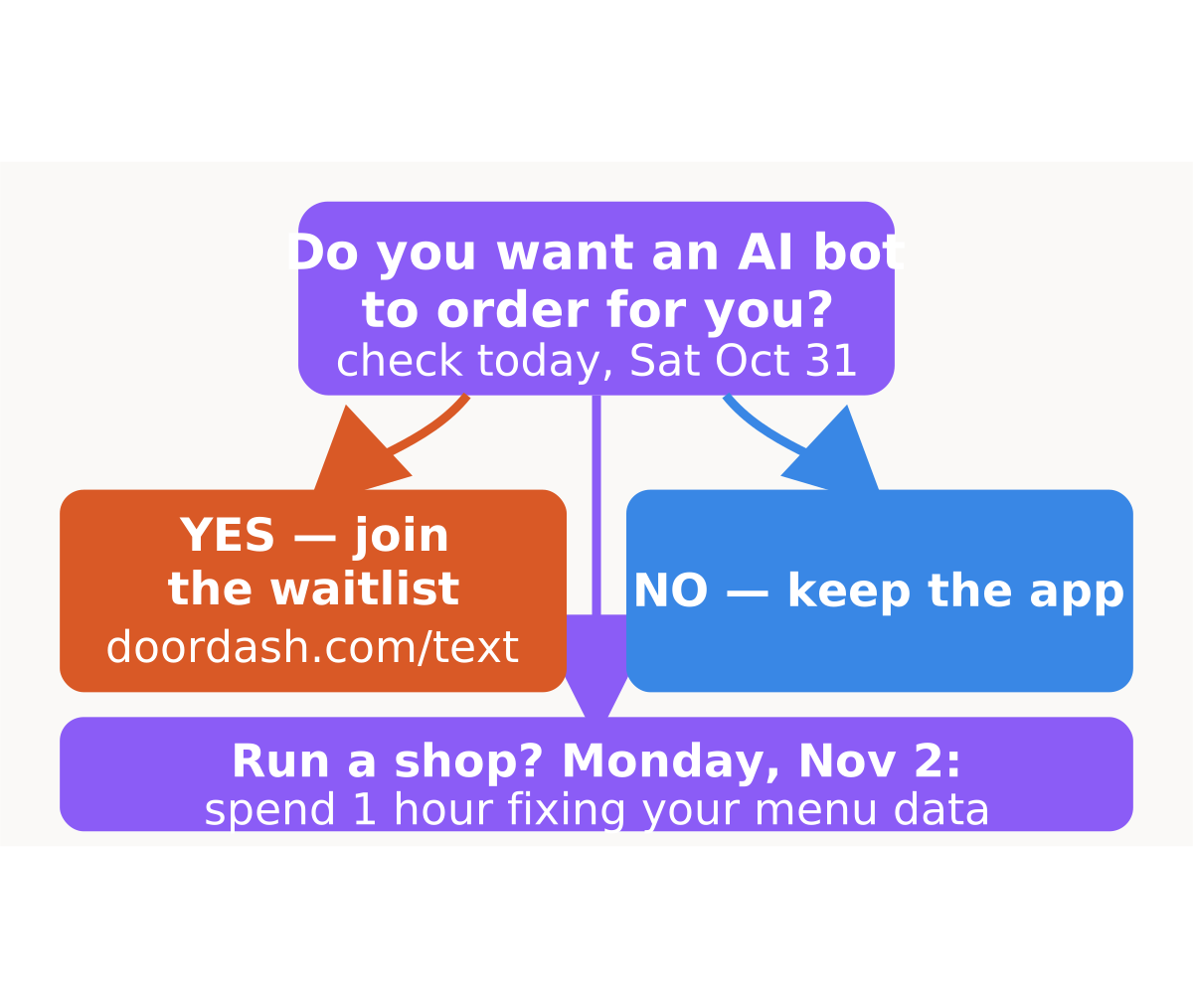
For people learning agents, the opportunity is to master useful assistance rather than promise fully automatic shopping. DoorDash's connection for outside agents is still limited to early partners, while its text-message ordering service launched with a waiting list (arstechnica.com; techcrunch.com).
For online sellers, I expect the next contest to be over which service an assistant recommends, not merely which app customers open; Amazon has resisted outside shopping agents while Walmart has welcomed them (techcrunch.com).
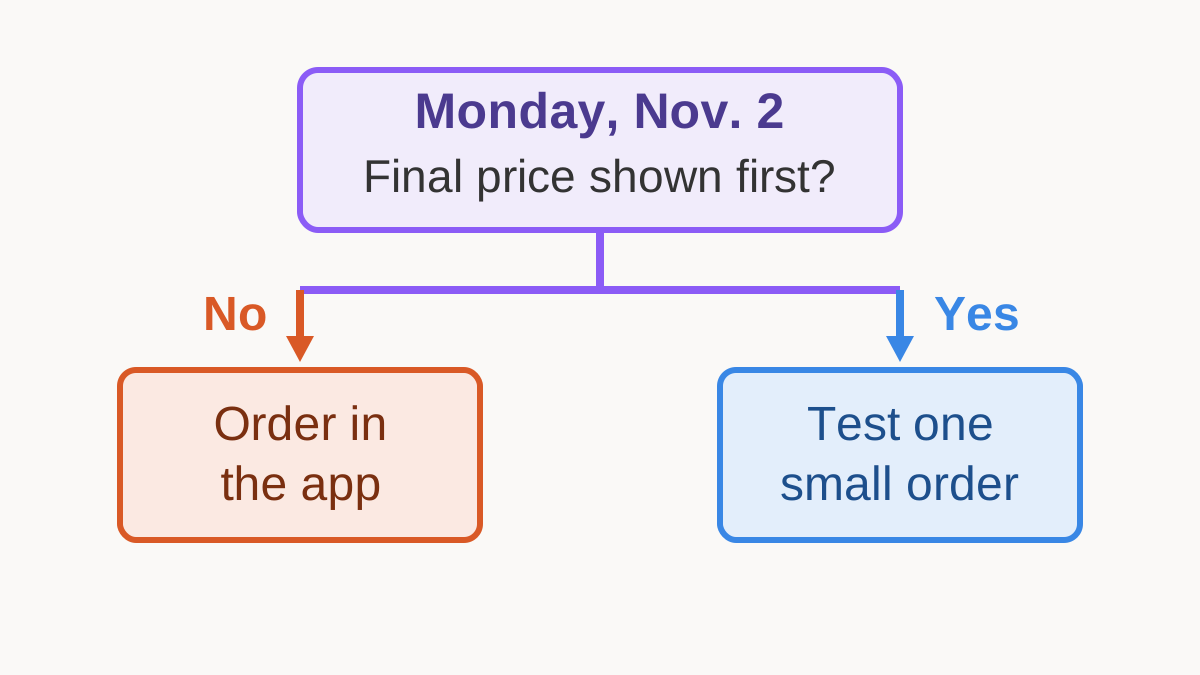
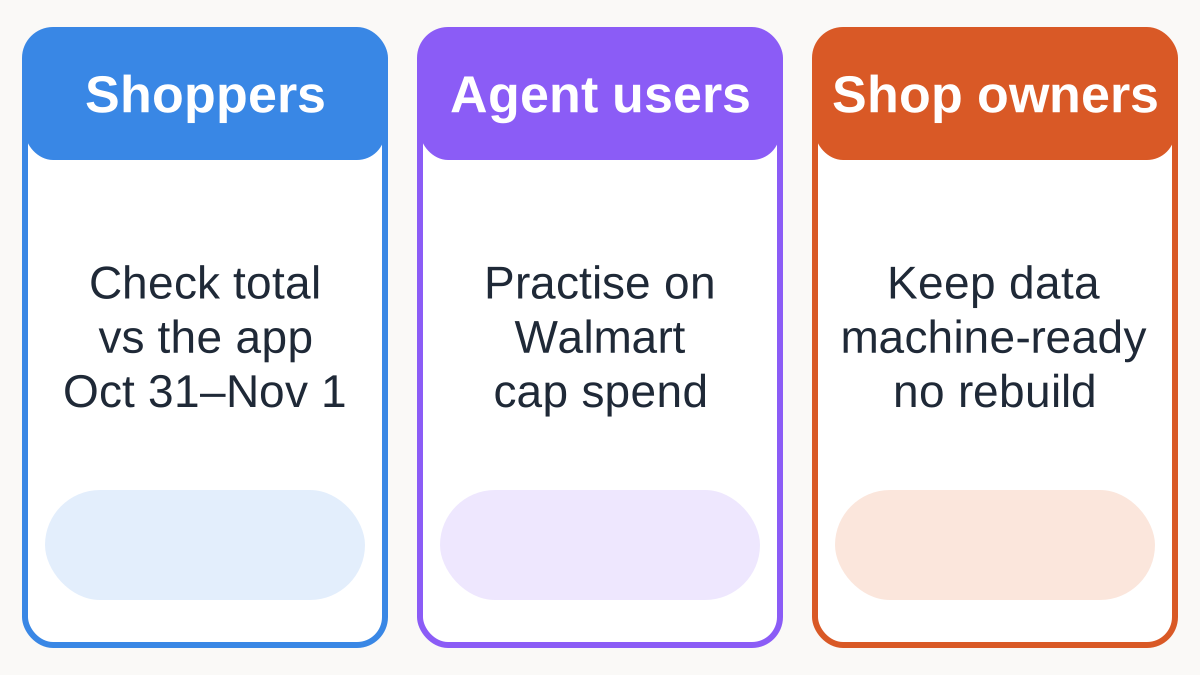
Try one low-cost shopping task this Saturday, October 31, if you're a shopper comfortable checking the result yourself; if not, use AI only to compare options and order manually. Ask it to compare the full price, delivery charges and alternatives, but approve the final purchase yourself.
If you're learning to run agents, practice price checks and confirmation steps this weekend; if you sell online, test whether an AI helper can find your products, understand their prices and explain your delivery terms before investing in automatic ordering.
Sources
- techcrunch.com
- arstechnica.com
- sec.gov
- 247wallst.com
- techcrunch.com
Its own forecast: By November 30, 2026, DoorDash will publicly announce at least one expansion of access to its text-message ordering assistant, without necessarily opening it to everyone nationwide. — 62% chance by Nov 30, 2026