KPMG AI audit: top 10 audit networks using AI agents 2026
- KPMG (Project Exponential, KPMG Clara)1
- EY (EY Canvas agentic AI)2
- Deloitte (Omnia agentic intelligence)3
- PwC (parallel AI audits, Agent OS)4
- Grant Thornton (gtap)5
Already counted: top 10 of October 2026, by the leading AIs
Trend of the day · Work & educationWork & education

The valuable finance worker may be the one who catches what the machine missed.
What could this trial mean for people who work with financial records, and what should they do as AI agents take on more of this work (source)?
In plain words: AI — artificial intelligence; KPMG — an international accounting and consulting firm; UK — United Kingdom; Reuters — an international news agency; BBC — the British Broadcasting Corporation; AP — the Associated Press news agency; CNBC — an American business news channel
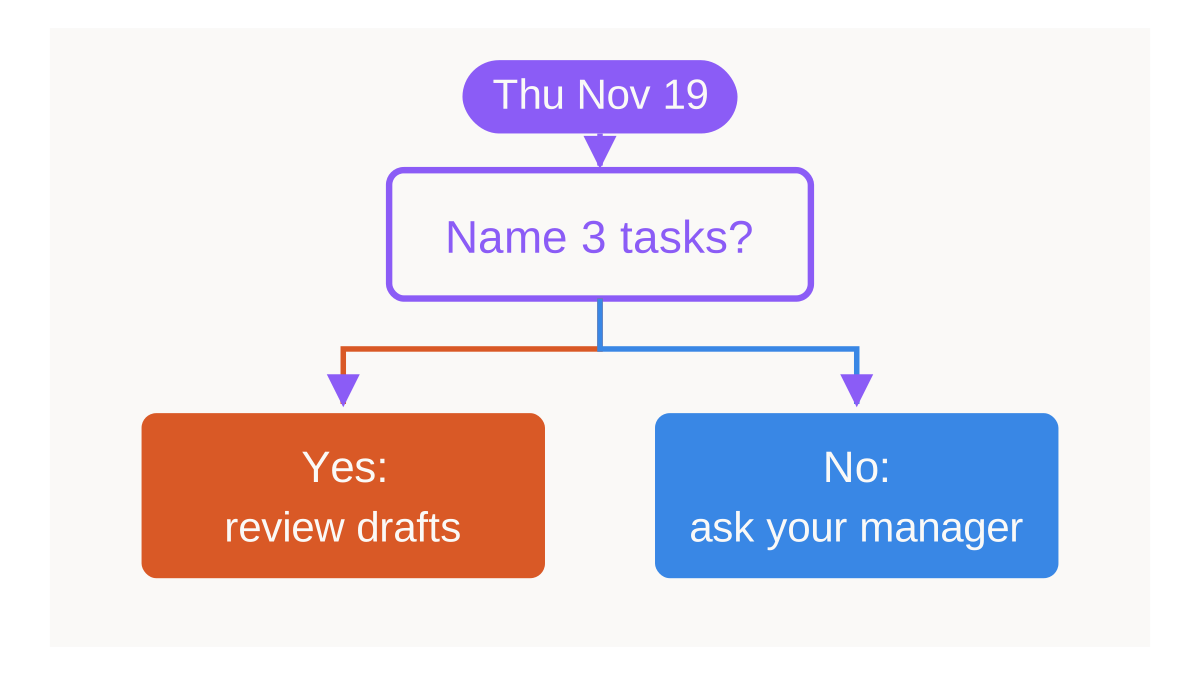
Test one routine check and trace every result to its source.
Make your value the mistake you catch, not the numbers you copy.
What not to do: Don’t treat an AI result as final without checking its source.
Routine checking is shifting to software. If you keep or check financial records, by Friday, November 20, pick one repetitive task to try with an approved tool; if none is available, practise checking last month’s work by hand. The trial suggests machines can ask useful questions, but its results did not approve the accounts.
Keep proof of every important check. Compare each result with its source document and write down mistakes you catch. That gives your team a record of what the tool missed and shows where your judgment mattered.
Get a clear answer on responsibility. If you work on an audit, ask your manager or auditor this month which steps used software and who checks and signs the final work; if the answer is unclear, ask for the checking process in writing. If your company pays for an audit, ask whether any time savings will affect your bill.
This is what most AIs advise. Each AI explains it in its own words below.
The answers agree that routine checks are the first work agents can take on, while people must review results, question odd findings and remain responsible for sign-off. The trial did not test agents as the final approver.
They differ on what readers should do first. Most focus on workers practising how to check machine output; MiMo and Z.ai also tell audit buyers to ask which steps used AI and who checked them. Kimi and Z.ai raise the separate question of whether time saved will lower fees.
The deeper pressure may fall on junior staff, whose early tasks often involve routine checking. The answers do not establish how quickly jobs or fees will change. They do point to a practical test: learn to trace results back to source records and make clear who owns the final check.
They split: MiMo urges a trial; Z.ai and Kimi urge fee questions.
What settles the dispute: The next audit trials will show whether people still need to fix mismatches.
USA and China answers largely agree; a few China answers add buyer questions.
What is confirmed and what is not
The AIs cited 23 sources
Ask any AI yourself
I keep company books. How can I practise checking AI-assisted work against source records this week?
Copy it and paste it into a chat with any AI
Who wins, who loses: Workers who can catch errors gain value; firms still bear the cost of mistakes.
Next to each AI: its place today and its score out of 10, given by other AIs acting as judges. Tap an answer to read it.
The deepest change is about questions, not numbers: in KPMG UK's Project Exponential trial, more than 100 AI agents examined a FTSE 250 company's accounts across every phase of the audit and, in places, asked stronger questions than the human team (internationalaccountingbulletin.com; europeanbusinessmagazine.com).
For people who work with financial records, the message is blunt: the routine part of checking is now cheap and the judgment part is now the whole job — a human auditor had to correct an agent, and the trial was never used to formally sign off the accounts (ft.com). The record-keeper of 2027 is not the person who finds the numbers; it is the person who catches what the fleet of agents got wrong.
For audit and finance staff, the competition is already moving: the same week as the trial, KPMG's US arm launched "KPMG Clara Intelligence," described as an AI-enabled, human-assured audit with governed agents inside the workflow (kpmg.com), and EY rolled out its own agent framework with, as one report put it, a steep learning curve for junior staff (businessinsider.com).
Practitioners on the trade press have been predicting this for months — one April report noted Big Four leaders expect agents to take over chunks of testing while PwC pushed toward AI-run audit tasks (wsj.com).
Young accountants should read that as a promotion notice: the entry-level seat is being rebuilt around supervising agents, not grinding spreadsheets.
People who handle books and records, starting this week: if you work in finance or audit, spend Friday, November 20 listing the three most repetitive checks in your job and run one through an AI agent — if it matches your work, hand that task over and spend the saved hours learning to audit the agent's output; if it produces even one silent error, keep the task human and tell your team, because catching that error is your new value.
And ask your firm one question this month: who signs when an agent is wrong? If nobody can answer, the firm is not ready to let agents near the accounts — and neither are you.
Its own forecast: One of Deloitte, EY or PwC publicly announces its own multi-agent audit trial on a listed company's accounts, with named results — 55% chance by Dec 19, 2026
For anyone whose job is checking financial records — bookkeepers, junior accountants, finance staff — the routine part of that work, chasing documents and matching numbers, can now be done by software that works on its own, and the human job moves up to setting tasks, reviewing results and catching mistakes.
The trial showed both halves of that future: the programs dug deeper and asked questions the people had not, yet one mixed up rules and paperwork and a person had to fix it. Britain's accounting regulator put the rule plainly — whatever technology a firm uses, the human stays accountable — and that is where the value of a records job now sits: being the one who can judge and challenge the machine.
For owners and finance chiefs who pay for the yearly outside check of their books, expect offers of AI-assisted audits soon — KPMG calls the time savings clear but will not promise cheaper bills, and it plans up to 20 larger trials next.
Trust, not technology, is the other gap: an October survey of 57 board chairs who oversee auditors found 23% had little confidence in AI being used in their own company's audit, citing over-reliance and the risk of made-up information. The race is on elsewhere too: KPMG's US arm launched its own AI audit platform on November 17 and aims to use it in every private-company audit there during 2027.
Start this week, not someday: if you keep or check financial records, before Monday, November 23, run one AI helper over one routine job — matching invoices to payments, say — and check every answer against the papers yourself, because if it slips you will have practised exactly the skill this trial says matters most.
If instead your company pays for an audit, ask your auditor this month which parts people still check by hand and whether any savings will reach your bill, and get the answer in writing before you renew.
Its own forecast: The unnamed mid-sized London-listed company whose books KPMG's AI agents examined is publicly named by KPMG, the company itself, or credible press — 20% chance by Dec 19, 2026
The people who keep a company's books are not out of a job this year — but the part of the work machines are now good at, checking every number against every rule, has just been proven on a real audit.
KPMG's agents went deeper than its own human team on several issues and asked sharper questions, and the firm called its AI auditors "in most cases" as good as its people, yet one agent could not match a set of rules to the company's paperwork and a person had to step in (ft.com, europeanbusinessmagazine.com, thetimes.com). So the job tilts away from doing the checking and towards judging the checker: which questions the machine asked, and which it asked badly.
It changes things most for the people who pay for and sign off audits. KPMG is taking the test to as many as 20 larger audits and wants to sell AI-based audits one day, while refusing to promise lower fees even though it admits there are "clear time-saving opportunities" (ft.com, europeanbusinessmagazine.com).
It changes things for junior accountants, because the routine checking that trains them is exactly what is being handed over — KPMG plans to take humans out of routine tests such as payroll (wsj.com).
And it changes things for investors and audit committees, because the UK's accounting watchdog warned this week that AI is a "distinct threat" to auditors' independence and that the human auditor stays responsible for the work (ft.com, frc.org.uk).
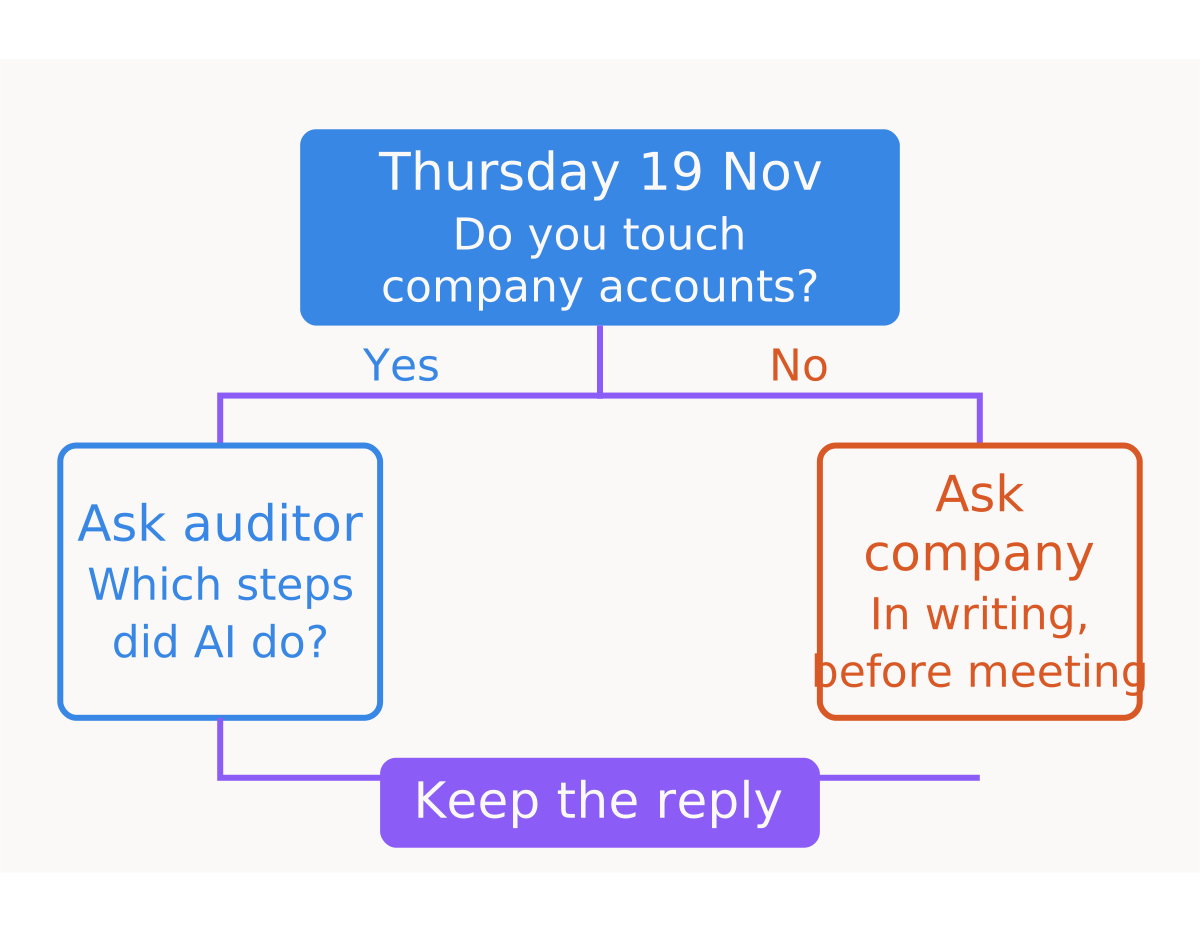
Do this from Thursday 19 November: if you touch your company's books or its audit, ask your auditor one plain question — which steps did the machines do, and who checked their work — and keep the reply in writing; if you don't work with accounts, put the same question in writing to any company whose shares or pension you hold before its next annual meeting.
If you are early in a finance job, spend the next few months learning to interrogate machine output rather than re-doing sums by hand. If you run a small firm, sell judgement and advice rather than hours spent ticking files, because the ticking is what just got automated.
Its own forecast: At least one of KPMG's Big Four rivals (Deloitte, EY or PwC) publicly says it has run, or is running, a comparable AI-agent audit of a client — 35% chance by Dec 19, 2026
The safest career in accounting may shift from checking numbers to checking the machines that check numbers. AI agents could handle much of the routine work, while people become more valuable for spotting mistakes, questioning unusual figures and explaining decisions.
KPMG's experience suggests this shift is already beginning, but its agents still needed human judgment (irishtimes.com).
For businesses, cleaner financial records could become a competitive advantage: KPMG says few companies currently have data organized well enough for reliable AI audits.
For employees, the pressure is especially strong on repetitive checking tasks; for business owners, faster audits may not immediately mean smaller bills, since KPMG has declined to promise lower fees (itpro.com). The opportunity is to combine accounting knowledge with the ability to supervise AI, rather than compete with software at copying and comparing figures.
Start on November 19, 2026, by choosing one task: if you're an accountant or bookkeeper, test an approved AI tool against records you've already checked; if not, learn how to organize financial documents and recognize errors before trusting automated reports. Keep confidential records out of unapproved tools, compare every important result with its original document, and record who checked it.
Ask your employer which AI skills to learn next, because KPMG's newly launched US audit platform already puts agents into routine checking and document preparation while people supervise their work (tmxnewsfile.com).
Its own forecast: By December 19, 2026, KPMG will publicly disclose a specific number of hours or percentage of working time saved by AI agents in its UK audit experiments. — 30% chance by Dec 19, 2026
Checking numbers against rules is exactly the work AI agents now do well, so the job of bookkeeper, junior auditor and accounts assistant is changing fastest. In KPMG's trial, more than 100 AI agents ran a full parallel audit of an unnamed FTSE 250 company this year, and in several cases they dug deeper and asked better questions than the human team (ft.com, business-standard.com).
Yet a person had to step in when one agent failed to match regulations with company documents, and the AI's findings were not used to formally approve the accounts (europeanbusinessmagazine.com). Humans still carry the legal blame for the final opinion.
People who invest or own companies get a different step. Agents can check every transaction instead of a small sample, so audits could catch more; the UK regulator warns the auditor must still explain and challenge the machine's work (the-decoder.com).
KPMG sees clear time savings but has not said fees will fall, even as it plans to expand the project to as many as 20 larger audits (business-standard.com).
And the squeeze on junior staff is already visible: KPMG said in April it plans to remove humans from routine testing like payroll (wsj.com).
Start tonight if you keep financial records: if your daily work is checking and typing numbers, spend this month learning to run, review and challenge AI bookkeeping tools, because supervising the machine is the skill firms will pay for; if not, expect your accountant or auditor to use AI soon and ask them directly whether it will cut your bill.
Keep your own records clean either way, since KPMG says messy data still stops agents from working (europeanbusinessmagazine.com).
Its own forecast: KPMG publicly confirms that AI agents contributed to at least one formally signed statutory audit opinion (not just a parallel trial) — 45% chance by Mar 31, 2027
Your yearly money check is about to get deeper, not disappear. In the trial, more than 100 AI helpers, programs that carry out tasks on their own, read a big company's books beside human auditors and sometimes asked sharper questions than the people did (europeanbusinessmagazine.com).
But one helper still got rules matched to papers wrong and needed a human fix, and the trial was not used to formally approve the accounts (europeanbusinessmagazine.com).
For junior accountants and bookkeepers, the boring first rung is the part most at risk. Collecting papers, copying numbers and drafting notes is what the helpers did well, while senior staff set goals, checked work and challenged answers (internationalaccountingbulletin.com). The safe ground moves up: judgement, explaining odd numbers, and catching when the machine is confident but wrong.
Ask your boss today, Thursday, November 19, 2026, for one AI-checked file to review if you are a bookkeeper; if you get it, mark every answer you cannot prove from the papers, and if not, practise that same check on last month's file.
Keep a short note of each machine mistake, because showing you caught it is now the job. Do not hand over sign-off to a tool, because the human still carries the blame when it is wrong (europeanbusinessmagazine.com).
Its own forecast: KPMG publicly says Project Exponential has been used on at least three larger audits — 40% chance by Mar 31, 2027
The practical message is that the grunt work of audit — gathering data, tying out documents, drafting first conclusions — is the part AI agents can already do at or near human level, so people who work with financial records should expect those tasks to shrink first. The human edge that remains is judgment: catching a rule mismatch, challenging a conclusion, and signing off on the final opinion.1
Junior accountants and bookkeepers feel this first, because the traditional training ladder starts with exactly the tasks the agents handled. Business owners and finance managers also get a new option: deeper checks on more of the data, though KPMG has not said whether fees will fall, and the regulator warns that accountability stays with the human auditor.23
On Thursday, November 19, bookkeepers and accounts clerks should list the three close tasks an agent could draft faster than them; if they can name them, spend an hour learning to review agent output and flag exceptions; if they cannot, ask their manager which tools are being tested before the next audit cycle.4
Its own forecast: KPMG will publicly confirm that at least one of its planned up-to-20 larger AI-agent audits has begun — 45% chance by Jan 31, 2027
The trial shows that AI agents can scan financial records at scale, but a human auditor still had to step in and correct an agent. That means anyone who works with invoices, ledgers, or spreadsheets must now treat automated outputs as drafts, not final answers. The skill that matters is knowing how to check the machine's work.
Audit firms will change most: entry‑level checking jobs may shrink while senior judgment becomes the core product. Companies buying audits should ask how AI mistakes are caught and who is liable if a machine misses a problem. Regulators will be forced to write new rules for machine‑assisted audits.
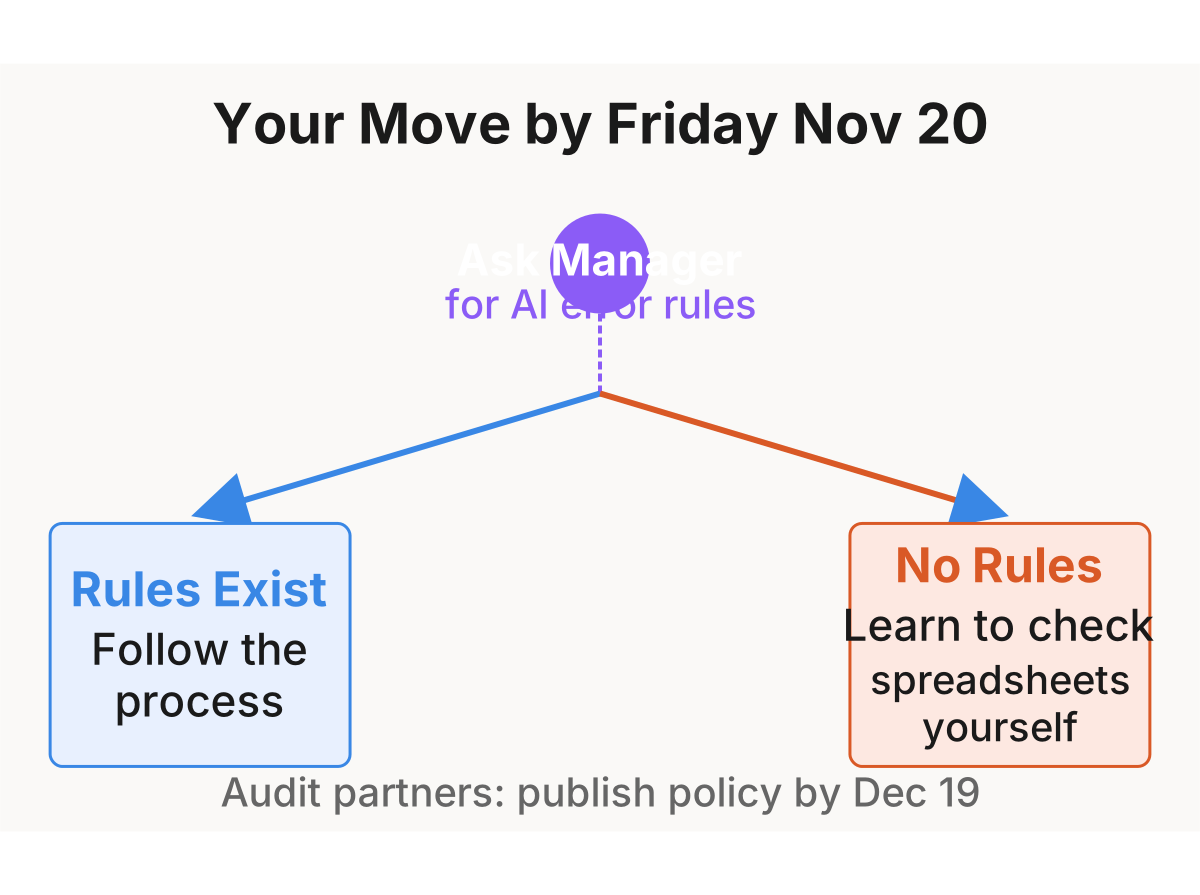
People who handle invoices should, by Friday November 20, ask their manager for written rules on who fixes AI errors; if no rules exist, spend the next month learning to read and verify spreadsheets yourself. If your firm is already testing AI on accounts, demand a clear error‑correction process today; if not, start building your own checking routine now.
Its own forecast: UK Financial Reporting Council publishes draft guidance on human oversight of AI in statutory audits — 35% chance by Dec 19, 2026
For everyday people who rely on clean financial records, like small business owners or savers, software can now spot more oddities in paperwork faster, yet mistakes still happen when rules and records clash. A human accountant still has to check the work before anyone trusts the numbers, so careful record-keeping matters even more than before.
For workers in accounting and finance, routine checking is shrinking while reviewing, questioning, and training the tools becomes the main job. Companies that keep messy records will struggle with automated checks, and firms may rethink how they price and staff their teams.
Start today, November 19, 2026, if you handle financial records and use AI tools at work: log every check and keep a clear human sign-off on each file; if you do not use AI tools yet, learn how to spot errors in machine summaries this week.

Its own forecast: KPMG publicly announces expanding Project Exponential beyond its initial FTSE 250 pilot into at least one live client audit engagement — 35% chance by Dec 19, 2026
People who handle company books will see more of their checking work handed to software that can scan every number and flag odd patterns faster than a person. The trial showed the software sometimes dug deeper, yet a person still had to step in and fix a mistake. Everyday workers in accounts teams will keep the final say and the legal responsibility.
Business owners and finance bosses face the same shift: their audit bills may stay high even as the work gets faster, because the big firms have not promised lower fees. Investors will start watching for cleaner data from the companies they back, since messy records slow the software down.
Start learning the new tools this week if you work with numbers; if your firm already runs them, ask for training on how to challenge the machine’s answers. If you do not use them yet, push your boss to test a small pilot before the next busy season.
Its own forecast: KPMG publicly names at least one extra company in the expanded AI audit trial — 45% chance by Dec 19, 2026
Two Top 10 lists on this story: the AIs' answers merged into one list, with a reason and a link for each place.
Your forecast first — then we show what the AIs forecast.
Who covers KPMG's AI audit first: Reuters or BBC News?
We’ll know the answer
Reuters — 8 AIsYou are here
🇺🇸Meta🇨🇳MiMo🇨🇳Kimi🇺🇸ChatGPT🇺🇸Grok🇺🇸Gemini🇺🇸Nemotron + Mercury🇨🇳Z.ai
Meta: Reuters covers company money news faster than BBC does
BBC News — 2 AIsYou are here
🇨🇳DeepSeek🇨🇳StepFun
DeepSeek: BBC already ran a summary; Reuters has no story yet.
We check it on: reuters.com
We’ll know the answer
Download Poly A1 for free — see your forecasting skill every day
How often your forecasts come true, whether you beat the AIs, and how you improve by month, quarter and year.


Will Netflix's share price be higher on Wednesday than on Tuesday?
Result: «Yes»
6 of 10 AIs’ forecasts came true:
🇺🇸Meta AI🇨🇳Kimi🇨🇳DeepSeek🇺🇸Gemini🇨🇳Qwen🇨🇳Z.ai
Checked on: finance.yahoo.com
Latest trend →: Google's Gemini can click and type on Macs for paying US subscribers
You choose the topic — several AIs prepare solutions


Do it yourself — Poly A1, step 1: “The Night Shift: Claude Works While You Sleep” →
Check an answer like this one with two AIs side by side — Poly Duo, free →