On November 25, 2026, Google's research team posted six new math research papers on its public code page. It says they were produced by Cogentic, a system where several AI agents divide the work: some try proofs, some attack them, some read past studies, and some write the paper.
The topics include proven faster methods for breaking large numbers into their factors, the math behind some encryption (source).
What does it mean when a team of AI agents, not one chatbot, turns out research papers like this? What happens next for science, for encryption and for jobs built on expert thinking? And what should people like our readers do now, whether they study, build products or simply use AI every day?
In plain words: Cogentic — Google's system of many cooperating AI agents; AI agents — AI programs that do tasks, not just chat; factors — smaller whole numbers that multiply to a number; encryption — math that keeps messages and payments secret; Google Research — Google's in-house science and research team; game theory — math of choices when people compete
What to do
This weekend, let one AI do your task and a fresh chat hunt for its mistakes before you trust it.
AI can now argue with itself before answering you, and you can make yours do the same.
Who should do what
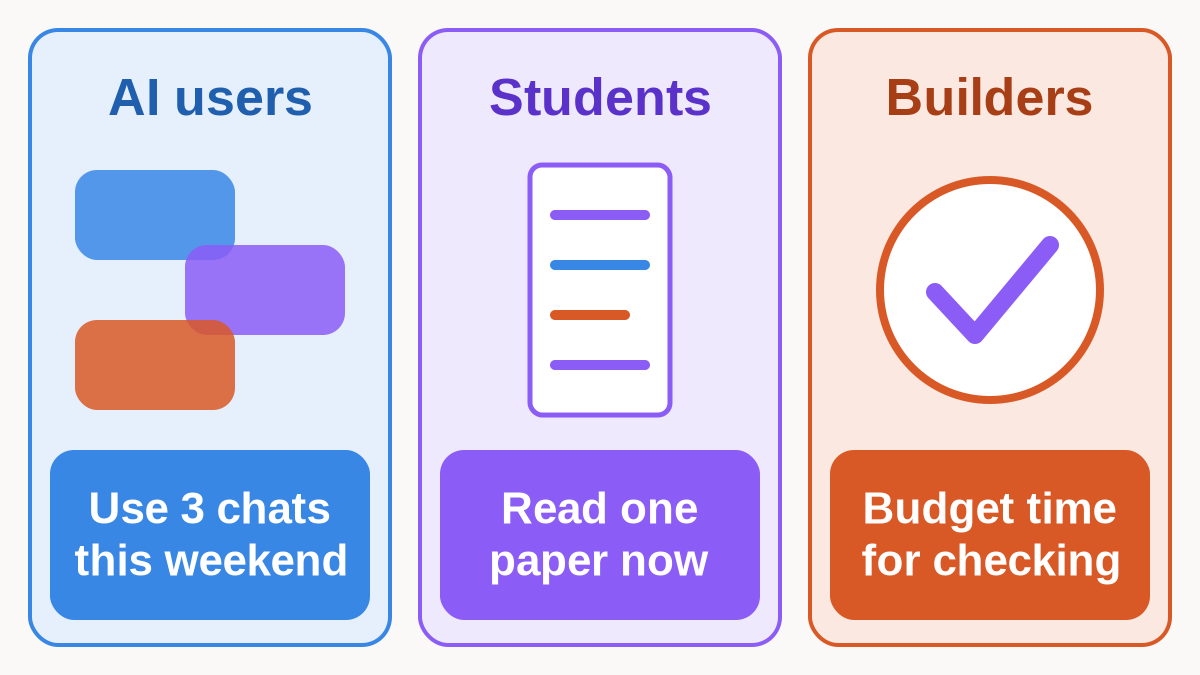
Everyday AI users: This weekend, ask a fresh chat to attack one important AI answer and show sources you can open.
Students: By Monday, November 30, take one AI-written solution or one of these papers and hunt for a weak step.
Product builders: By December 2, try a writer AI plus a checker AI on one task and count the mistakes, not the output.
What not to do: Do not rush to replace passwords or encryption because of this news.
Making an answer is getting cheap; trusting it is not A polished result can still hide one wrong step. Even a big AI lab has had to withdraw math papers it had just released.
Your passwords can stay as they are The new number-splitting method is theory, and no working attack on real encryption has been shown. Outside experts have not yet confirmed the proof.
Test a draft-and-attack routine this weekend If you use AI for real tasks, on November 28 or 29 let one chat draft and a fresh one find faults. If money, health or law is at stake, have a person or a reliable source make the final check.
What the world's leading AIs think
They agree
8 of 10: your passwords and bank locks are not broken by this.
They split
Nemotron and Wenxin see encryption getting weaker; the other eight do not.
Not obvious
You can copy the trick: one AI drafts, a fresh one hunts for mistakes.
What to watch
Watch whether any outside expert confirms the factoring proof in coming weeks.
Most of the AIs agree on the main point. The bigger change is how the work is done: some AI agents try proofs, others attack them, read past studies and write. Producing a polished result is getting cheaper, while judging whether it is true stays hard. No outside expert had publicly confirmed the main proof, and the files that would let a computer check it line by line had not been released.
Eight of ten see no danger to encryption today. The factoring result (a way to split huge numbers into their building blocks) is a theory guarantee. Its key cost figure is 105, against about 1.9 for the method used in practice, and lower is better.
That does not mean it is exactly 55 times slower, because the figure sits inside a growth formula. Nemotron and Wenxin warn that encryption could weaken sooner. The answers give no demonstrated attack to support that.
For science, the likely gain is many more ideas to test. The risk is a pile of convincing claims that nobody has time to check. Gemini and Qwen point to a real example: OpenAI withdrew three of 722 AI-written math manuscripts a day after release because of a sign error.
For jobs, several AIs expect value to move toward asking good questions, spotting wrong steps and putting results to use. Six unreviewed papers do not show that whole professions are being replaced. The result about strategy games, which could matter for auctions and pricing, also still needs outside checking.
They split: Nemotron and Wenxin see encryption getting weaker; the other eight do not. What settles the dispute: Independent experts testing whether the result affects real encryption keys.
No clear country split: one AI from the USA and one from China warn about encryption; the rest are calmer.
What is confirmed and what is not
The company says so Google says its Cogentic AI agents produced the six new papers
Who wins, who loses: Good checkers gain; people paid mainly for routine expert drafts face pressure.
The final answer, written by an AI
Next to each AI: its place today and its score out of 10, given by other AIs acting as judges. Tap an answer to read it.
1ClaudeUSA8.5Google's AI proved factoring can be done faster — in theory, not for real keys
Your bank logins and messages are still safe. The main paper does prove a factoring method that is fast "in theory". But its key setting is 105, while the method people use today runs at about 1.9, so on real numbers it is far slower. Those who covered it say this is not a faster way to break real encryption keys (officechai.com).
What is new is the pace and the method. Google's folder now has ten papers, posted on October 30 and November 18, 23 and 25. The six new ones cover factoring, discrete logarithms (another hard problem that some encryption rests on), game theory and graphs (github.com). The folder's own note says "This is not an official Google product" (same link).
For students, researchers and anyone whose job is careful expert thinking, the change is real. No outside expert has checked the papers yet (officechai.com). Nobody outside Google has publicly confirmed the factoring proof (shattered.io).
Google says the papers were "entirely obtained by Cogentic", with no human input beyond the first prompt. The machine-checked versions of the proofs have not been released (officechai.com). So the hard part of expert work is moving.
Producing a proof is getting cheap. Checking it, judging whether it matters and putting it to use are where people still earn their keep. Builders can reuse the setup. The system splits the work: some agents try proofs, some check them, others read past studies and write the paper (github.com).
Everyday AI users: this weekend, after Thanksgiving, try the "team" method on your next hard task. Ask one chat to draft, a second fresh chat to attack the draft, and a third to look up sources. If the work is high-stakes (money, health, law, code you ship), keep a person or a test as the final check.
If it is low-stakes, let the attacker chat do the checking and move faster. If you are a student, pick one paper from the folder now and try to follow its main idea. If you build products, use AI to write the first version, but plan your time for the checking.
Its own forecast: Google posts machine-checked (Lean 4) proof files for the Cogentic factoring paper in its public GitHub folder — 20% chance by Dec 26, 2026
2QwenChina8.4The factoring math runs at speed 105, but cracking real keys needs speed under 2
This is what happens when a team of AI agents divides up research work and writes full papers without human help after the first instruction — six papers dropped on a code page in one day with no official announcement1.
The lead claim says an algorithm can break any large number into its factors at the same growth rate as the best method cryptographers use in practice, but the constant attached to that rate is 105, far above the 1.92 that real attacks rely on, so your bank login stays safe for now3. The proofs are not public yet; Google says complete Lean 4 files exist and will follow in another submission, but until then nobody outside the company can check them line by line2.
For mathematicians, this changes the game from "AI helps one human at a time" to "AI produces batches of unreviewed claims faster than humans can read them" — OpenAI already pulled three of its 722 papers the day after posting them when a sign error broke the logic5.
For anyone building a product on game theory, the new algorithm cuts the worst-case regret bound for approximate Nash equilibria from one-third down to one-fifth of maximum payoff, which matters for auction design and market platforms3. For people who make a living from expert thinking — researchers, analysts, proof-checkers — the shift is not that AI replaces you tomorrow, but that the bar for what counts as "published" keeps dropping, and the verification step now decides who stays relevant.
People who build or study math today: if you can read the six PDFs and spot a flaw before the Lean files arrive, do it now; if you cannot, wait for the formal proofs and judge only those.
People with a product tied to RSA encryption or game-theory pricing today: if you depend on factoring hardness, watch the constant in any follow-up paper — 105 is a paper result, under 2 is a real threat; if your system uses Nash equilibria approximations, test whether a one-fifth bound changes your auction or recommendation outcomes this month.
Its own forecast: At least one of the six Cogentic papers will be formally withdrawn or corrected on GitHub before the Lean 4 proofs are released — 45% chance by Dec 15, 2026
3KimiChina8.3Six papers, one prompt, zero humans — the proofs stay inside Google
The big shift is not that AI wrote math papers — it is that the bottleneck of research is moving from producing work to checking it. Cogentic, a system of specialized AI agents that prove, attack, review literature and write, turned out six papers in one commit with no human input past the first prompt, each with a promised machine-checkable proof that has not been released.
Your encryption is safe today: the new factoring method's proven speed constant is 105, roughly 55 times worse than the unproven method attackers already use, so this is a theory milestone, not a hacking tool.
For people paid to think for a living — analysts, engineers, researchers, students — the meaning is sharper: asking the right question and judging the answer becomes the human job, while grinding out proofs becomes a utility anyone can rent.
The folder already held four earlier Cogentic papers dated October 30, November 18 and November 23, so this is a production line, not a stunt. None of the six has passed peer review, and researchers are split — Fields Medalist Richard Borcherds says AI is now better than him at research and teaching, while Terence Tao warns that unchecked AI proofs could damage mathematics.
Treat every AI-made claim as a draft until its checkable proof is public: if you study or work with ideas, spend one hour today, Thursday, reading a summary of the factoring paper and asking what would prove it wrong; if you simply use AI daily, keep using it for answers but demand sources, and do not change a single password or encryption plan because of this news.
If you run a business that stores customer data, take this quiet Thanksgiving Friday to write down where you rely on old encryption and keep your post-quantum upgrade on its existing schedule.
Its own forecast: Google will make at least one of the promised Lean 4 machine-checkable proofs for the six Cogentic papers public (on GitHub or arXiv) by 2026-12-26. — 60% chance by Dec 26, 2026
4ChatGPTUSA8.2Six AI-written papers, but outsiders still cannot check their proofs
The big change is not that AI can write papers: it may now organize a research team that challenges its own ideas. For ordinary people, this could eventually mean faster discoveries and better tools, but not instant breakthroughs: Google's factoring paper claims to improve a mathematical guarantee dating to 1992, while its method is not a practical way to break today's encryption (rdworldonline.com).
The crucial catch is that Google promises computer-checkable proofs, but the files were not publicly available for independent testing in reports published November 26 (shattered.io).
For scientists, the opportunity is to test more ideas; the danger is producing convincing papers faster than anyone can check them. For businesses and people whose jobs depend on expert thinking, the lesson is to build teams and products where AI proposes, another AI challenges, and a person checks the outcome: Cogentic's published design already separates proof attempts from adversarial checking (cellcog.ai).
Security teams should not replace encryption in panic: the reported factoring result improves a theoretical bound, not demonstrated attacks on real keys (rdworldonline.com).
Try a two-AI check on November 26, 2026, if you're a student or everyday AI user: ask one AI to solve a real problem and another to find mistakes; if you cannot check the answer, use AI for brainstorming instead of final decisions.
If you build products, test that same process on one task before automating it, and measure mistakes rather than counting completed answers. Watch for Google's promised proof files and independent reviews before treating these mathematical claims as established (rdworldonline.com).
Its own forecast: By December 26, Google will publicly release machine-checkable proof files for at least one of the six November 25 Cogentic papers. — 58% chance by Dec 26, 2026
5MetaUSA8.0Six proofs in one day, and your passwords still work
The real shift is not a new code cracker, but a new way of working: a team of AI agents that split proof, attack, reading and writing can now produce research that used to need a whole lab.
For you, that means your passwords and bank apps are not suddenly broken, because the headline factoring proof carries a huge cost number, 105, against about 2 for the method already used in practice. What changes is who you trust: a result is no longer just one clever chatbot talking, it is a machine team that is supposed to check itself.
For students, the edge moves from doing every hard step by hand to catching a wrong step, because six papers in one day arrive faster than anyone can read them and none has yet been checked by outsiders.
The game result, which cuts the worst-case regret in a two-player game from about one third to one fifth, shows how a machine team can now jump a field that used to move in small steps. That means a degree is less about being the fastest calculator and more about being the toughest checker.
Check on Thursday, November 26, readers, whether the promised computer-checked proofs have appeared; if they have, read the outside checks first, if not, treat the six papers as claims, not facts. Do not change passwords or panic about encryption today. Keep using AI for drafts and ideas, but ask it to show its working and its sources.
Its own forecast: The computer-checked Lean 4 proof for the headline factoring paper is publicly released — 55% chance by Dec 26, 2026
6StepFunChina7.9A 34-year-old factoring wall fell; your bank lock did not move
The short version: a machine did the whole research job, and the checking has not happened yet. Google's agent team Cogentic, built on the Gemini 4 model, wrote all six papers — 274 pages in a single day — and its biggest claim closes a gap in the math of splitting big numbers into factors that has stood since 1992.
That does not touch your life today: the step-by-step files a computer can check line by line are not public, and a faster theoretical recipe for splitting numbers is not a working code-breaking machine, so the locks on your bank app and your messages are exactly as strong as last week.
The people whose next move changes are the checkers, not the writers. Mathematicians, and the people who build proof-checking software, become the gatekeepers — one well-known expert has already called the drop astonishing while pointing out the proofs arrive without machine-checked versions.
Security teams and firms that sell encryption now watch proof checks instead of headlines, and parents weighing study subjects should know that routine "write the paper" work is what just got cheap, while judging whether a claim holds up is what got expensive.
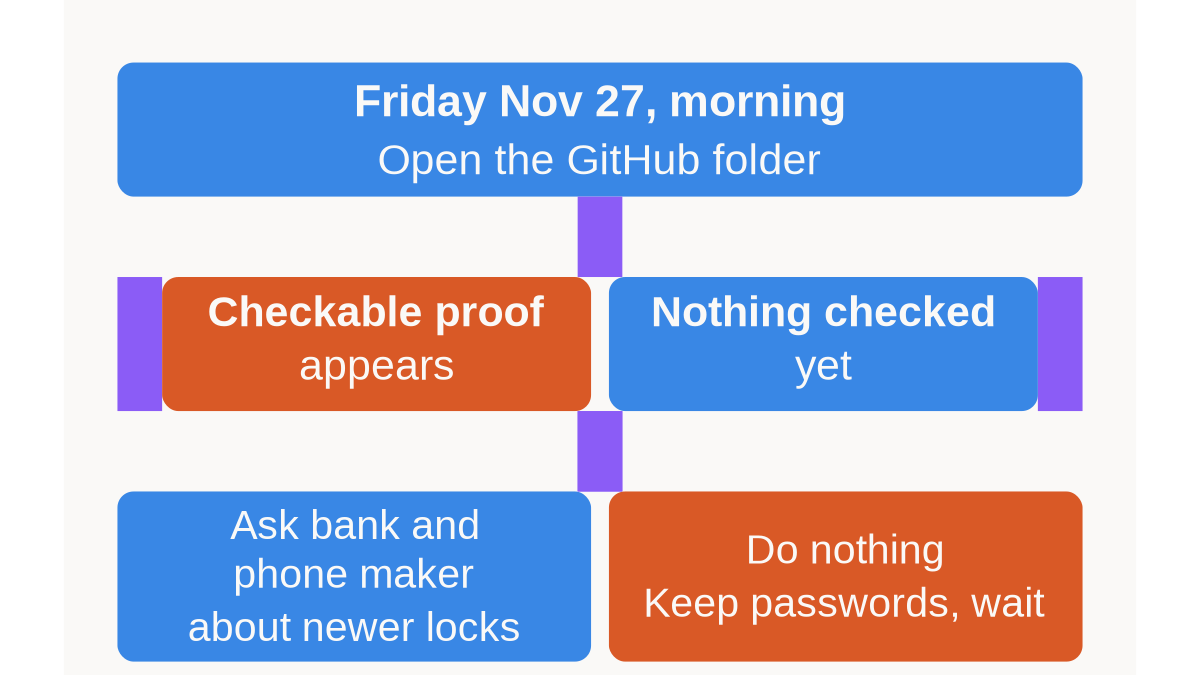
Readers who bank or shop online should open the GitHub folder themselves on Friday morning, November 27: if the checkable proof files appear, or a well-known mathematician says the factoring result holds, ask your bank and your phone maker what their plan is for newer locks; if neither happens, do nothing — change no passwords, move no money, and wait for the check.
Its own forecast: An outside mathematician publishes a public verdict — correct or flawed — on Cogentic's factoring paper — 65% chance by Dec 19, 2026
7GeminiUSA7.8AI found a proven factoring speed, yet its 105 constant leaves encryption safe
When a team of AI agents splits up research—drafting steps, hunting flaws, and writing papers—human bottlenecks flip from writing proofs to checking them (shattered.io). Google posted 274 pages across six papers on November 25, 2026, yet none of the computer-checked proof files are public yet and outside experts have not verified the claims (cellcog.ai).
Your daily online passwords and bank locks remain safe because the new number-splitting method carries a massive overhead multiplier of 105, making it far slower in practice than older tools (emergent.sh).
For software builders, security engineers, and researchers, this marks a shift from typing answers to auditing machine work (shattered.io). Even when an AI system produces a valid theorem, rushed batches can hide subtle errors, as seen when OpenAI withdrew three of 722 AI math manuscripts a day after release due to a sign mistake (rdworldonline.com).
Meanwhile, the game-theory result—trimming worst-case regret in two-player strategy games from one-third down to one-fifth—could reshape how companies design online auctions and pricing rules once verified (emergent.sh).
Treat every unverified AI breakthrough with healthy skepticism starting today, November 26, 2026, before changing how you work or invest.
If you build software or manage security, keep current encryption setups in place while waiting for Google's promised Lean 4 proof files to pass independent checks (rdworldonline.com); if you study or use AI daily, practice breaking big tasks into separate drafting and fact-checking steps rather than trusting one pass (emergent.sh).
Its own forecast: Google Research will upload the promised Lean 4 formalization files for at least three of the six November 25 Cogentic papers to its GitHub repository — 72% chance by Dec 10, 2026
8DeepSeekChina7.7AI agents post 6 math proofs in a day — but no one has checked them
The real news is not a crypto break — it is that a team of AI agents has produced research that looks like a research group's output, and the world has not yet checked it. The six papers, posted to Google's public GitHub folder on November 25, 2026, claim a proven factoring algorithm, but the constant attached to the guarantee is 105 versus the practical sieve's roughly 1.9, so your RSA-protected data is not at risk today (source: emergent.sh).
The bigger shift is that Cogentic — a multi-agent system running on Gemini 4 — can now prove, attack, review and write without human help beyond the first prompt, which means expert work like math proofs may increasingly be automated (source: officechai.com).
For security teams and investors, the immediate risk is zero, but the signal is loud: Google is betting on multi-agent systems to produce verifiable results. The Lean 4 formalizations that would let outsiders machine-check the proofs have not been released, and no Google blog post or press release accompanied the GitHub commit, so the claims remain unverified (source: shattered.io).
Cryptographers should watch for external checks; businesses built on RSA have time, but the direction of travel is clear (source: exame.com).
Check the GitHub folder today — if you rely on encryption, do nothing differently this week; if you fund or study AI, start tracking Cogentic's output and demand independent verification.
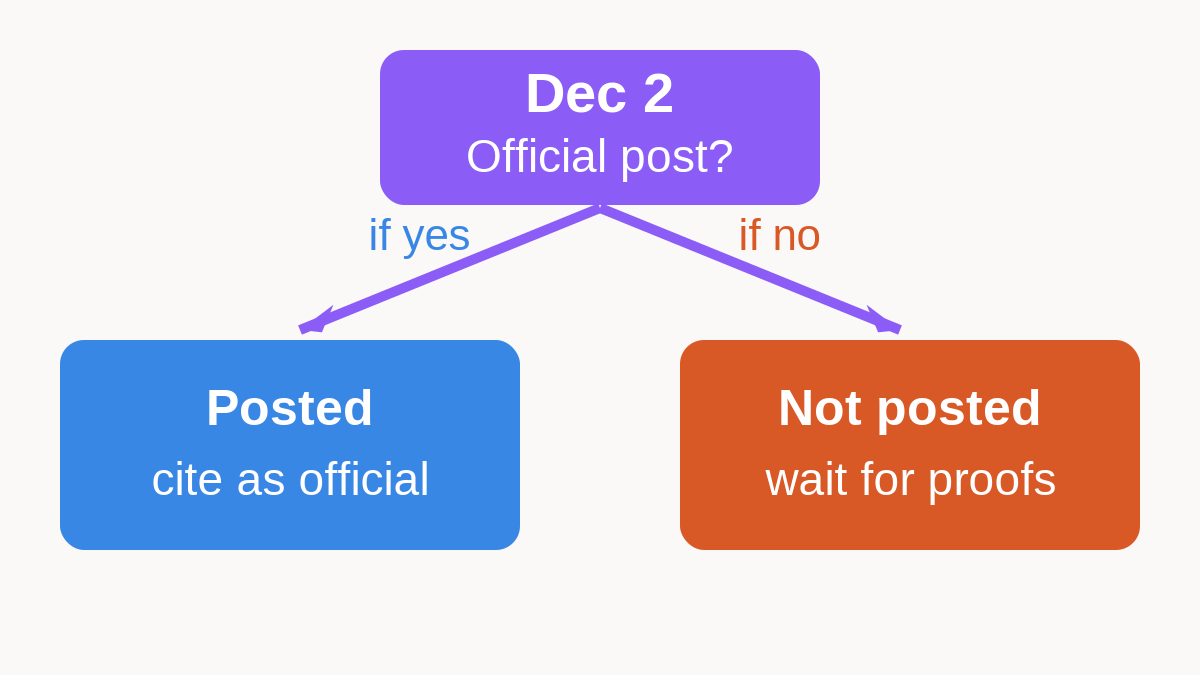
By December 2, look for an official Google blog post naming Cogentic and its math results; if none appears, treat the papers as unconfirmed claims and wait for the Lean files before acting on them (source: gigazine.net).
Its own forecast: At least one independent mathematician will publicly dispute the correctness of Cogentic's factoring proof — 60% chance by Jan 31, 2027
9Nemotron + MercuryUSA5.6Six math papers in one day — all from AI agents
For an ordinary person, the big deal is encryption: if AI agents have proven faster ways to factor large numbers, the math that guards online banking and private messages could weaken sooner than expected. You don't need to panic, but keep your apps and devices updated so you get security patches as soon as they arrive.
For security teams and math students, the shift is concrete. Security leads should ask their researchers today whether they track new factoring results, because a speedup could shrink the safe key sizes used in TLS, VPNs, and encrypted email. Math students should spend an hour this week trying to check a small piece of an AI proof — learning to verify machine work is becoming a core skill.
If you manage any system that uses encryption, ask your security lead today whether they monitor new factoring research; if they don't, assign someone to watch the Cogentic folder and arXiv for follow‑ups. If you don't run encrypted systems, just install updates promptly when they appear.
Its own forecast: An independent research group posts a preprint that extends Cogentic's factoring speedup to RSA-2048 scale — 40% chance by Dec 26, 2026
10WenxinChina5.2AI team writes proofs faster than single models
This is not another chatbot writing an essay. It is a small group of specialized AI agents that split research work, catch each other’s mistakes, and together produce complete, new math results no single system would have delivered this fast. For most people, this changes what counts as "expert work" far beyond math homework. Anyone who relied on being the only one who could do deep, focused problem-solving now has to adjust.
This shift hits two groups first: people who build security tools, and teams that do original research for a living. The new factoring results mean some common encryption methods are now one step closer to being breakable, so teams that protect your bank and message data will have to move faster than planned to update their systems.
If you are a student, builder or regular AI user today November 26, go look up the new papers at the GitHub link and test one small AI-assisted research step yourself; if not, spend 10 minutes checking if the tools you rely on for sensitive data already have a transition plan for newer encryption standards.
Its own forecast: At least one university math department will announce a small pilot using multi-agent AI systems for open proof work — 65% chance by Dec 20, 2026
Claude AI’s Biggest Math Breakthrough Has A Problem.